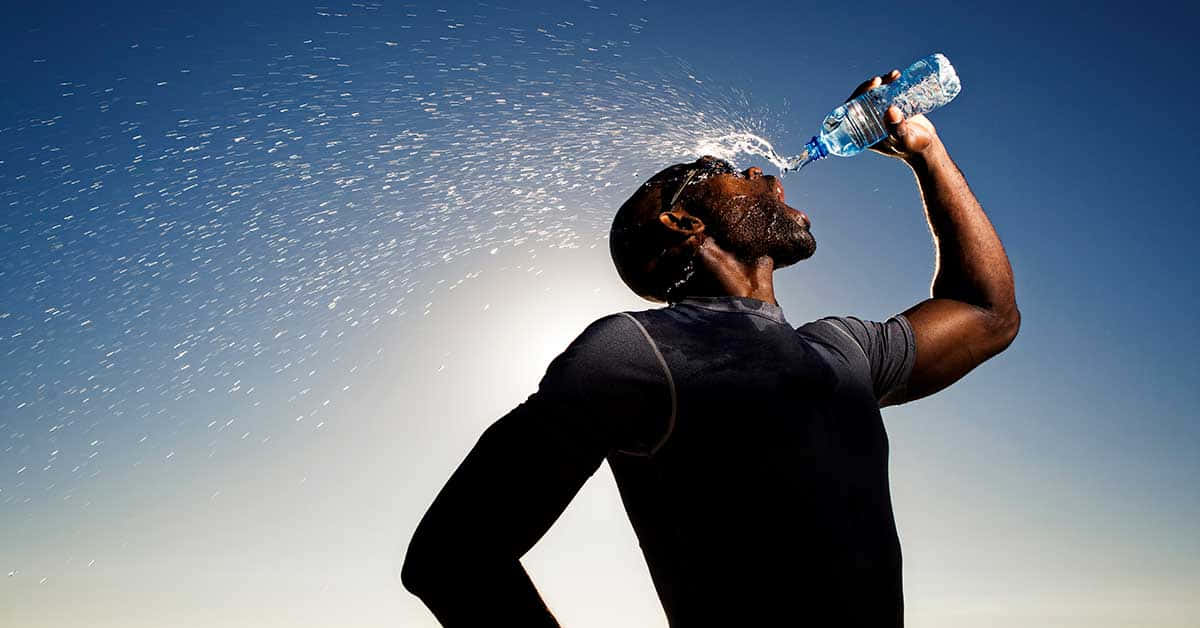
You can have the perfect workout program, dialed-in macros, and 8 hours of sleep every night — and still leave 25% of your performance on the table because of the most boring variable in fitness: water.
Hydration is genuinely the most slept-on performance factor I've ever encountered. People will spend $80 on a pre-workout, watch a 90-minute video about peri-workout nutrition, and then walk into the gym 1.5 liters down because they forgot to drink water at work. The fix is free, takes 30 seconds, and works better than any supplement on the shelf.
Here's what the science actually says, how much you need, and how to make hydration a real habit instead of a New Year's promise.
Why Hydration Matters More Than You Think
Your body is roughly 60% water. Your muscles? About 75% water. Pretty much every system that matters for performance — temperature regulation, nutrient delivery, force production — runs on water.
When you're properly hydrated:
- Temperature regulation — Your body can cool itself through sweat without overheating mid-set.
- Nutrient transport — Glucose, amino acids, electrolytes get to your muscles where they're needed.
- Joint lubrication — Less grinding, less ache, lower injury risk.
- Waste removal — Lactate and metabolic byproducts get flushed faster.
- Power output — Cellular hydration directly impacts how hard your muscles can contract.
Here's the kicker: just 2% dehydration — barely noticeable — can drop strength performance by up to 25%. That means the bench press you normally hit for 8 reps suddenly feels heavy at 6. Multiple studies have replicated this. It's not woo. It's biology.
7 Signs You're Already Dehydrated
By the time you feel "thirsty," you're already mildly dehydrated. Don't wait for the obvious signal. Watch for:
- Dark yellow urine — The fastest, most reliable indicator. Aim for pale yellow.
- Unexplained fatigue — Heavy weights that "shouldn't" feel heavy.
- Mild headache — Especially in the late afternoon.
- Dizziness — Most noticeable when standing up fast.
- Cramps — Calves cramping mid-set is often a hydration + sodium issue.
- Brain fog — Hard to concentrate, hard to focus on form.
- Sudden drop in performance — Today feels like a 9/10 RPE on weights that are usually a 7. Drink water.
💧 The 5-Second Hydration Check
Look at your urine first thing in the morning. Pale yellow = good. Dark yellow/amber = you went to bed dehydrated, fix it today. Completely clear = actually overhydrating, ease off.
How Much Water Do You Actually Need?
"Drink 8 glasses a day" is the most useless health advice ever given. A 60 kg woman doing yoga twice a week and a 100 kg lifter training in summer heat have wildly different needs. Use a real formula based on bodyweight:
Daily water (ml) = Body weight (kg) × 30 to 40
Daily water (oz) = Body weight (lb) × 0.5 to 1
For example, an 82 kg (180 lb) lifter should aim for 2.5 to 3.3 liters per day (about 90–120 oz). Active people, hot climates, and high-protein diets all push you toward the high end.
Add for training: An extra 500–700 ml (16–24 oz) per hour of exercise. If you sweat a lot, lean higher.
When to Drink: A Simple Schedule
Before Training
- 500–600 ml (16–20 oz), 2–3 hours before your session.
- Another 250 ml (8 oz), 20–30 minutes before walking in.
During Training
- 200–300 ml (7–10 oz) every 10–20 minutes — sip between sets.
- Sessions over 60 min, especially in heat: add electrolytes.
After Training
- 500–700 ml (16–24 oz) for every pound lost during the session.
- Don't know how much you lost? Weigh yourself before and after in just shorts. The difference is mostly water — replace it.
Electrolytes: When They Actually Matter
Water alone isn't always enough. Sweat is salty for a reason — you're losing electrolytes (sodium, potassium, magnesium, calcium) that regulate muscle contraction and nerve signaling. Replace water without replacing salt and you can actually lower your blood sodium, which is its own problem (hyponatremia).
Key electrolytes for lifters:
- Sodium — Lost in the highest quantity through sweat. The most important.
- Potassium — Critical for muscle contractions.
- Magnesium — Helps prevent cramping (and improves sleep).
- Calcium — Required for normal muscle function.
When to bother with electrolytes:
- Workouts over 60–90 minutes
- Hot/humid environments
- Heavy sweaters (you know who you are)
- Low-carb or low-sodium diets
Cheap options that work: a pinch of pink salt in your water bottle, electrolyte tablets (LMNT, Element, Liquid IV), or coconut water for natural potassium. You don't need a $40 supplement.
Make Hydration a Habit, Not a Chore
The reason most people fail at hydration isn't motivation — it's the same reason they fail at calorie tracking: they forget. Building a daily routine works far better than relying on willpower.
What works for me and most people I've helped:
- Glass of water before coffee. First thing, no exceptions. You wake up dehydrated.
- Carry a 1L water bottle everywhere. Visible cue beats invisible willpower.
- Drink at every meal. Already 4 anchor points in your day.
- Pre-, intra-, post-workout. Three more anchors.
- Track it. Same principle as everything else in fitness — what gets logged gets handled.
The Bottom Line
Hydration isn't glamorous. It won't sell you a supplement. No one's making YouTube thumbnails about water. But it's the cheapest, fastest, most measurable performance upgrade available to you — and most lifters are leaving it on the table.
Tomorrow morning:
- Drink a tall glass of water before your coffee.
- Fill up a 1 L water bottle. Carry it everywhere.
- Drink at every meal, before training, between sets, after training.
- Track it.
Two weeks of this and you'll feel a difference in the gym you can't get from any pre-workout. Promise.