
How to Break Down a Big Subject Into a Study Plan
“Learn Spanish” and “understand organic chemistry” are ambitions, not next actions. Here is how to turn a sprawling subject into a map you can use this week.
Build the plan →No miracle routines and no guilt disguised as productivity advice. Just useful ways to turn a subject into clear work, practice it actively, and keep going when the week gets crowded.
“Learn Spanish” and “understand organic chemistry” are ambitions, not next actions. Here is how to turn a sprawling subject into a map you can use this week.
Build the plan →Ten places to begin. Pick the problem you have today.

Retrieval practice is useful. Turning every sentence into a card is not. Learn the lighter way to test what you know.
Read guide →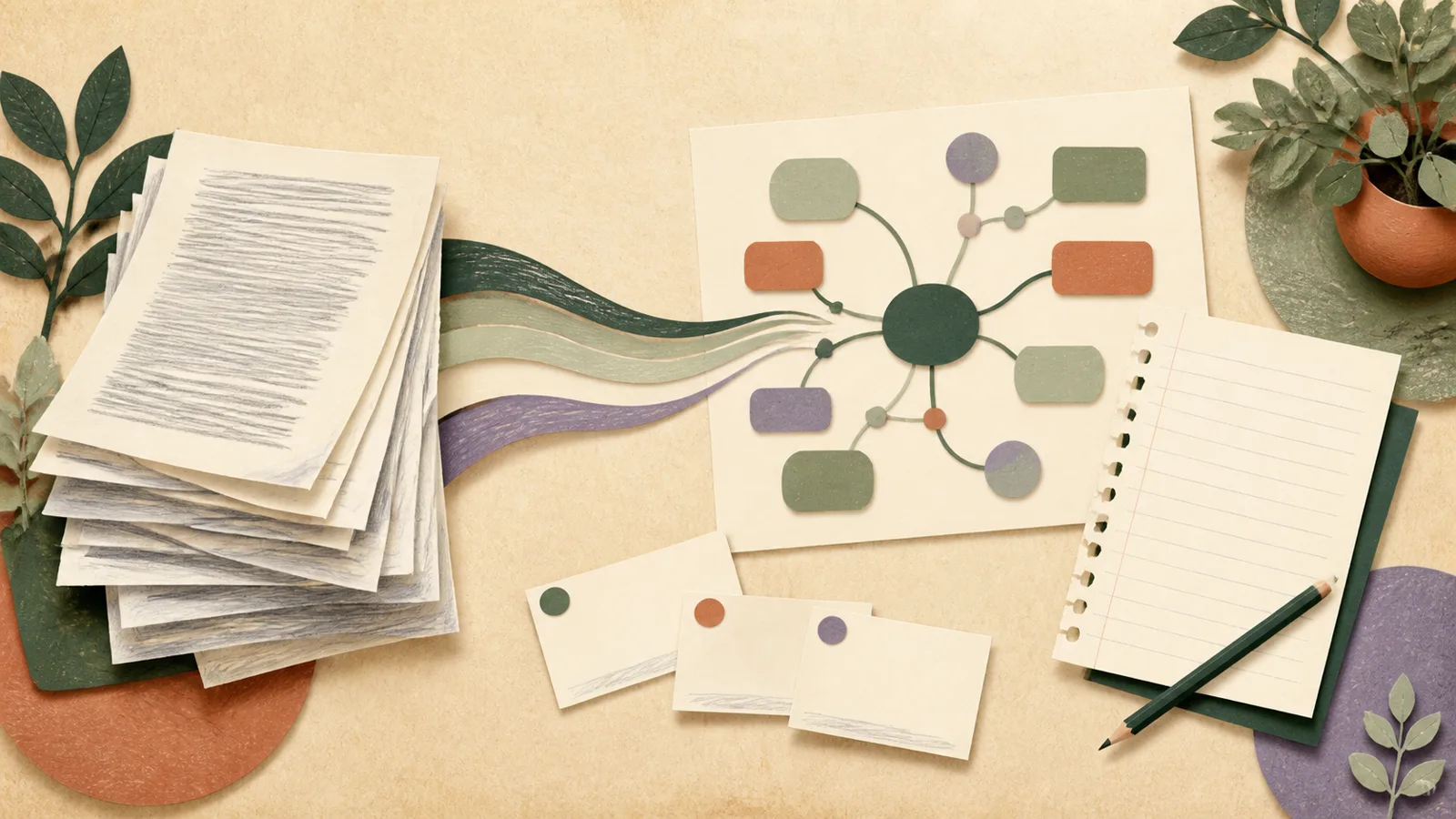
A repeatable pass through dense readings: orient, question, read, compress, retrieve, and return only where memory failed.
Read guide →
Write cards that ask one fair question, expose confusion quickly, and stay useful after the first review.
Read guide →
You do not need a perfect algorithm. Start with a small deck, honest ratings, and a review rhythm you can keep.
Read guide →
There is no magic number. Match the block to the work, your energy, and the quality of attention you can actually sustain.
Read guide →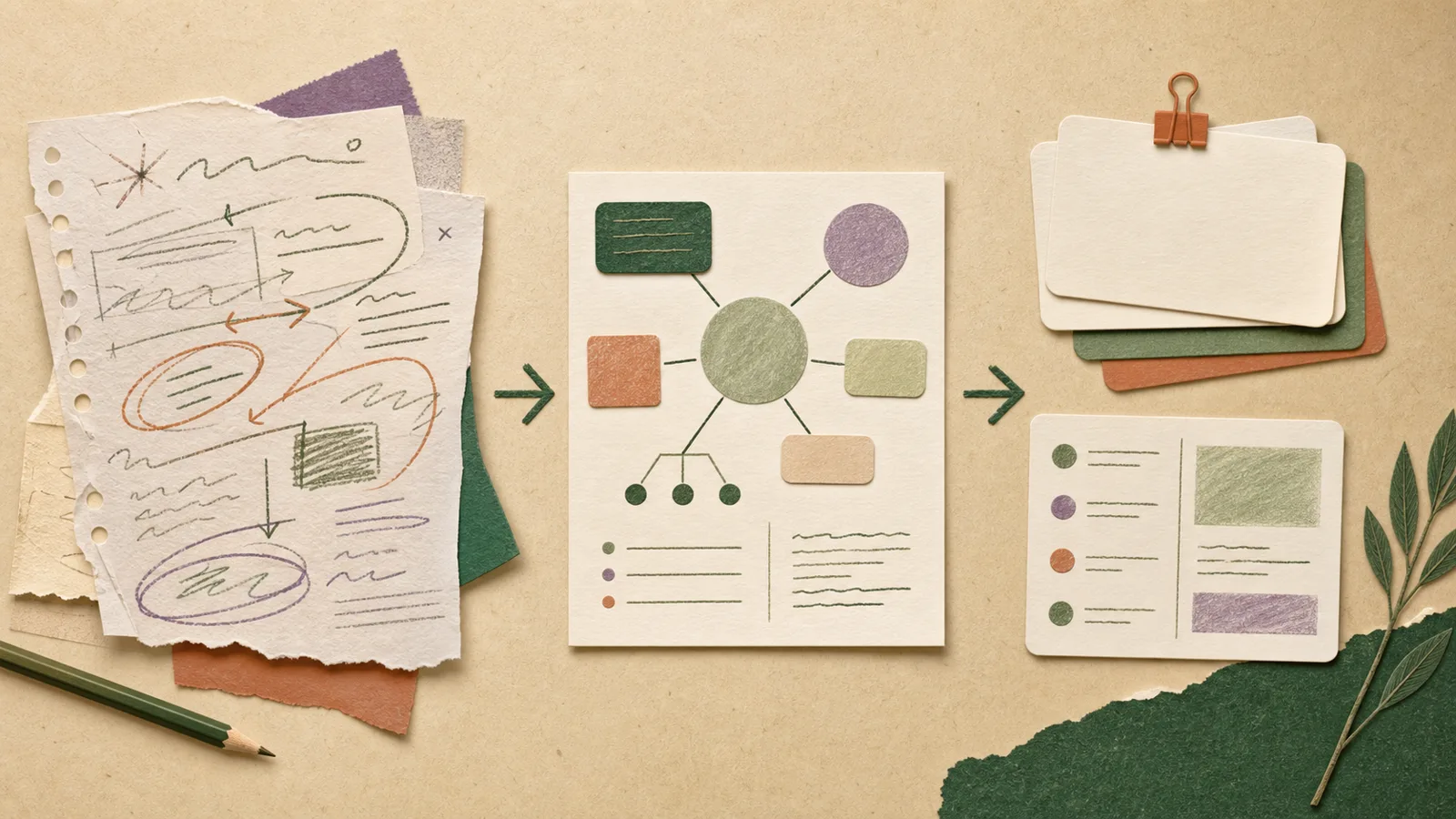
Notes are a capture layer, not the finished product. Give them a short second pass while the lecture is still recoverable.
Read guide →
Stop negotiating with the entire project. Shrink the first action until beginning costs less than another round of avoidance.
Read guide →
Use company for starting, quiet work, and honest check-ins—not as a substitute for doing the difficult part yourself.
Read guide →
Time tells you that you showed up. It cannot tell you what became easier, what you can retrieve, or what needs another pass.
Read guide →OffShelf Editorial writes for people who have something real to learn and limited time to learn it. We use primary research and university sources when a claim depends on evidence, separate practical suggestions from settled findings, and avoid pretending that one routine works for every subject or every person.